Travel to Iceland
Day 1 Reykjavík - Thingvellir - Geyser - Gullfoss - Gamla Laugin - Seljaland (245 Km.)
It has been about twenty years since we visited Iceland during the summer season. This time, the northern lights were our main motivation to return and, while we were at it, to enjoy the scenery again, but during the autumn season. We spent the first day touring Iceland's Golden Circle, which includes Thingvellir National Park, the Geyser geothermal area and the Gullfoss waterfall.
(46 Km. away) Thingvellir: Thingvellir National Park captivates with its unique beauty and historical significance. Situated in the gap between the North American and Eurasian tectonic plates, this park is a living testimony to the dynamic geology of our planet. There are several car parks from which to explore the various trails that wind through the rugged rock formations and lava fields. Among the park's highlights is the impressive Öxarárfoss waterfall, where crystal-clear waters cascade over black basalt cliffs in a breathtaking spectacle.

Thingvellir
The national park, a UNESCO World Heritage Site, also has significant cultural importance for the Icelandic people. Thingvellir was the meeting place of the Althing, one of the oldest parliaments in the world, which was established in 930. Here, Icelandic leaders and citizens gathered to make decisions, settle disputes and enact laws, setting a precedent for democracy and justice. History intertwines with nature at Thingvellir, creating a unique atmosphere that invites reflection and awe. At Silfra Rift, visitors can dive into its incredibly clear glacial waters. It is an underwater rift formed by the slow movement of the North American and Eurasian tectonic plates, which move apart approximately 2 centimetres per year in this area. This tectonic activity has created a rift that stretches for several kilometres and is filled with extremely pure, crystal-clear meltwater.

Thingvellir - Öxarárfoss
(60 Km. away) Geyser: The Geyser geothermal area, located in the Haukadalur valley, is famous for the Strokkur geyser. The word "geyser" itself comes from the Icelandic word "geysir", meaning "eruption". The most famous geyser in the region, known as Geysir, was discovered by the Vikings in the 13th century. Over the years, Geysir has had periods of intermittent activity, with eruptions sometimes reaching staggering heights. In modern times, however, its activity has decreased significantly. Fortunately, the nearby Strokkur geyser has taken its place as the region's main geothermal attraction. Strokkur has been active since the 19th century. Strokkur normally erupts approximately every 6 to 10 minutes. This makes it one of the most active and reliable geysers in the world, allowing visitors to witness this natural spectacle quite easily.

Geyser Geothermal Area
In the case of Strokkur, rainwater and snow seep through cracks in the ground and infiltrate the underground geothermal system. This water is heated by volcanic activity beneath Iceland's surface. As the water heats up, it turns to steam and the pressure inside the underground cavities increases. When the pressure reaches a critical point, the water and steam are forced to escape through a narrow opening in the surface, known as the geyser duct. This sudden release of pressure triggers the spectacular eruption of the geyser, shooting hot water and steam up into the air. In addition to the famous geyser, the Geyser area is dotted with other geothermal wonders, such as fumaroles, bubbling mud pools and pools of amazingly coloured hot springs. Well-marked trails allow visitors to explore this landscape.
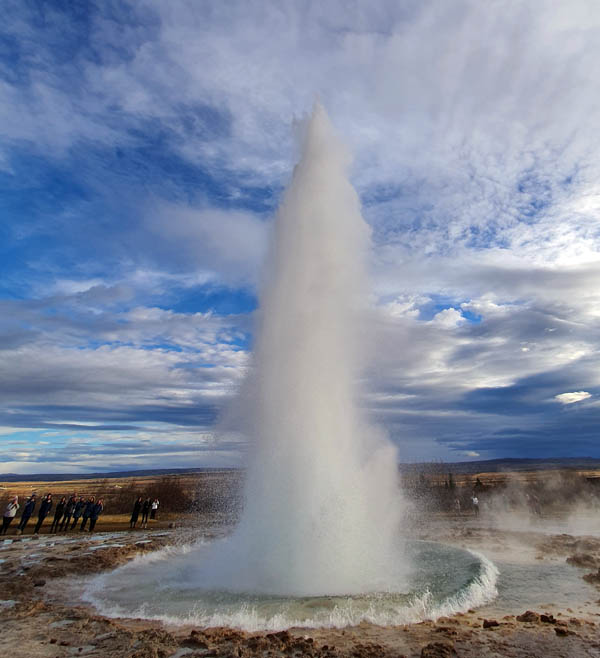
Geyser Strokkur
(9 Km. away) Gullfoss: Gullfoss, known as the "Golden Waterfall", is one of Iceland's most impressive natural wonders. Located on the Hvítá River in the southwest of the country, this majestic waterfall falls in two steps, creating a spectacular sight. The Gullfoss waterfall has a total height of approximately 32 metres, divided into two main falls. The flow of the waterfall varies according to the season and weather conditions, but on average, Gullfoss has a flow rate of around 109 cubic metres per second. The waters of Gullfoss come from the Hvítá River, which originates from the Langjökull glacier in the Icelandic Highlands. The Langjökull glacier is one of the largest sources of fresh water in Iceland and feeds several rivers, including the Hvítá.

Gullfoss
The history of Gullfoss is marked by the courageous struggle of Sigríður Tómasdóttir, an Icelandic woman who strongly opposed plans to build a hydroelectric power station at the waterfall in the early 20th century. Sigríður fought tirelessly to preserve the natural beauty of Gullfoss, even going so far as to threaten to throw herself into the waterfall in protest. Thanks to his efforts and those of other environmental campaigners, Gullfoss was saved and is now a protected and admired tourist destination around the world, a timeless witness to the power and beauty of Icelandic nature.
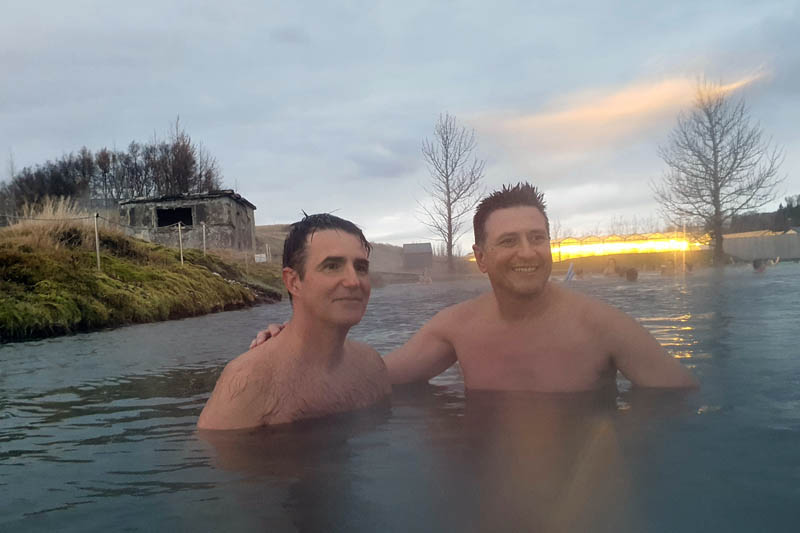
Secret Lagoon (Gamla Laugin)
(32 Km. away) Laguna secreta (Gamla Laugin): We dedicate the end of the day, taking advantage of the fact that at the end of October at half past five it gets dark here, to enjoy a relaxing time in one of Iceland's thermal baths. Gamla Laugin, also known as the Secret Lagoon, is a geothermal oasis located in Flúðir in southern Iceland. This natural thermal pool offers visitors the opportunity to soak in warm, relaxing waters surrounded by stunning natural scenery. Unlike other more well-known geothermal attractions, such as the Blue Lagoon, Gamla Laugin retains its serene and tranquil charm, offering a more authentic, less crowded and less expensive experience. Gamla Laugin's history dates back to the 1890s, when the first man-made pool was built on the site for locals to enjoy the healing benefits of the hot springs. Since then, it has been a popular retreat for both locals and travellers seeking to rejuvenate body and mind in a unique natural environment.
(88 Km. away) Seljaland: We go to sleep in this town, with the aim of visiting the Seljalansfoss waterfall first thing the next morning. Unfortunately, the sky is cloudy, as it was the night before, so we miss the chance to see the northern lights.